
The Final Frontier: New Edited Volume Explores the Language of Ancient Iranian Eschatology
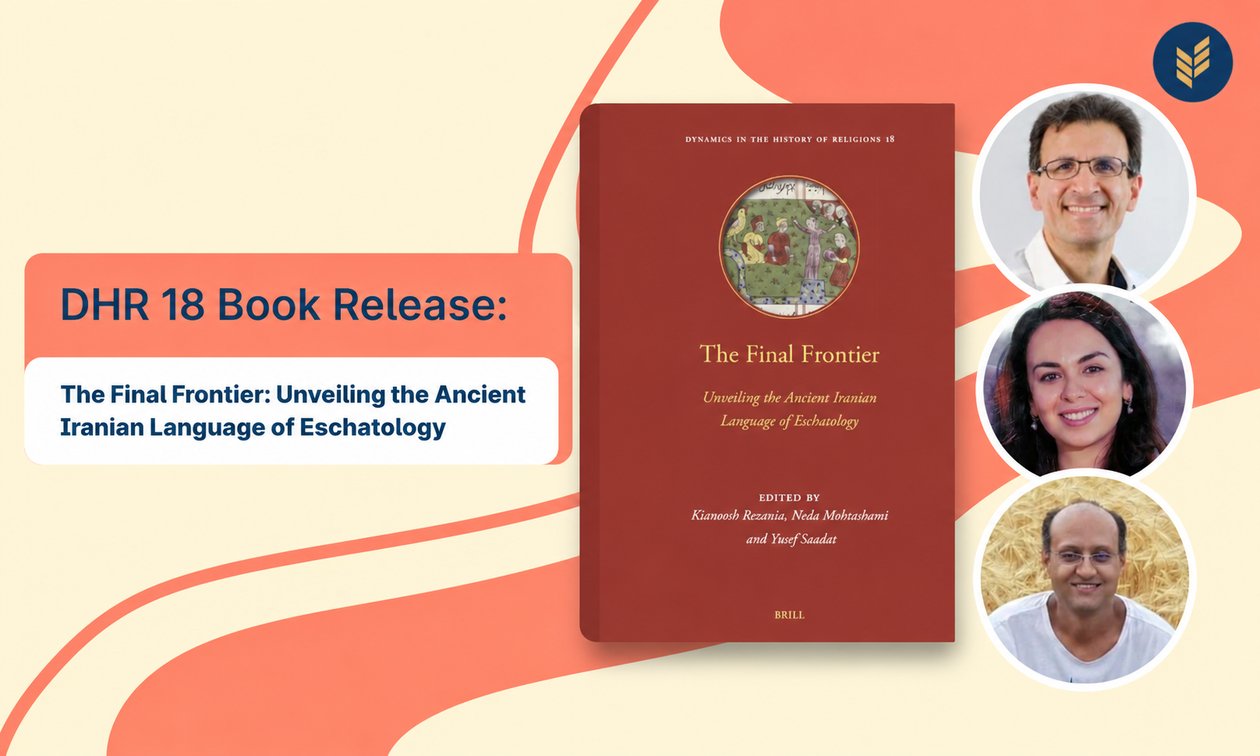
This question lies at the heart of the edited volume The Final Frontier: Unveiling the Ancient Iranian Language of Eschatology, edited by Kianoosh Rezania, Neda Mohtashami, and Yusef Saadat. The publication was produced within the framework of Collaborative Research Centre (CRC) 1475 “Metaphors of Religion” and has been published by Brill as Volume 18 of the academic series Dynamics in the History of Religions (DHR).
Bringing together twelve original scholarly contributions, the volume examines how eschatological concepts are articulated in Zoroastrian and Manichaean textual, ritual, and iconographic traditions. It explores how Iranian religious sources conceptualize death, the afterlife, and communication with the transcendent world, while also engaging in comparative dialogue with Christian traditions.
A central focus lies on the role of metaphorical language. Through metaphors of journeys, chariot races, kingship, light and darkness, fragrance, royal architecture, and spatial ascent, the contributions explore how abstract and otherwise ineffable religious concepts become accessible through familiar images and experiences. Metaphors are examined not merely as linguistic expressions, but as fundamental cognitive frameworks that shape religious thought.
Methodologically, the volume combines Conceptual Metaphor Theory with close philological analyses of Avestan and Middle Persian sources. By integrating cognitive approaches, historical linguistics, and the study of Iranian religions, the publication offers new perspectives on the language of eschatology and the conceptual foundations of religious thought.
Publication Details: The Final Frontier: Unveiling the Ancient Iranian Language of Eschatology
Edited by: Kianoosh Rezania, Neda Mohtashami, and Yusef Saadat.
Series: Dynamics in the History of Religions (DHR), Volume 18 Publisher: Brill
Further information about the publication: https://brill.com/display/title/75809